
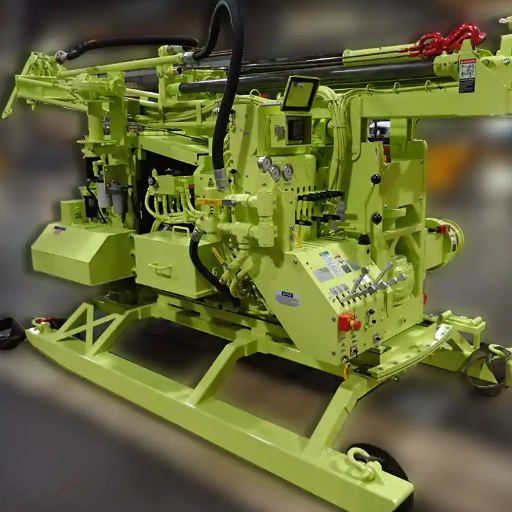
Skid-Mounted Drill Rig: Versatile Drilling Solutions
In contemporary drilling contexts, efficiency, adaptability, and toughness are sine qua non. To cater to the different requirements in industries such as mining, construction, and geotechnical studies, drill rigs mounted on skids have proved to be an innovative solution that has changed the way things work. These types of advanced rigs, in particular, are built to be compact and easily transported, and a considerable amount of vacuum can be directed towards moving them into different environments for operation. The discussion in this article will include – but is not limited to – skid-mounted drill rigs, their distinguishing features, benefits, and the areas of application in the recent past. Readers will have the opportunity to appreciate why these types of drill rigs are turning into the drills most used by professionals around the world. Enhanced efficiency or cost-effective drilling options, be it in this case, the reader will also find this resourceful guideline very enlightening.
Introduction to Skid-Mounted Rigs
While drilling units have been mounted on the truck bed or are situated offshore, drilling units that are mounted on the skidding base of the unit are regarded as “skid-mounted rigs.” The latter is widely used because of the convenience of its assembly and ease of relocation, which are the primary problems with truck-mounted rigs. These and other benefits of skid-mounted rigs extend and substantially reduce the work contribution of these operations and the drilling crew itself. Skid-mounted drill rigs ensure proper positioning in many industrial operations, especially in remote places, taking into account the complexity and operational capacity in these places.
Definition of Skid-Mounted Rigs
Skid-mounted rigs are special independent drilling machines that are mounted on reinforced steel structures or frames (ex. skids) with the purpose of easy transition and quick deployment to any inflamed zone. These types of rigs were created to be used even in the absence of fixed structural support and/or foundation; therefore, these types of rigs are effective in secluded locations or in temporary operations. Skid – Mounted Rigs frequently find application in such industries as oil production, geothermal well construction, and mining, because they offer durability, ease of assembly, and affordability. Their compact layout facilitates the preparation of sites for use, but they are also versatile enough to be used for the fulfillment of several functions by different clients, thus optimizing operations in even the most unfavorable terrains and climates.
Primary Benefits of Skid-Mounted Drill Rigs
Convenience and Flexibility in Movement
A drill mounted on skids is built purposely for ease of movement and can be redeployed quickly from site to site without much re-assembly. The advantage of the skid-mounted design is that it can easily be relocated to several different locations, thus ensuring that there is minimal time lost between changeovers.
Affordability
Skid-mounted rigs are advantageous because of their light – that is, small and simple – structure. Less widespread logistic needs, shorter time deployments, and little to no preparatory groundwork enhance cost effectiveness from the intended projects, thereby enabling especially economic activity in most operations.
Versatility and Personalization
Drilling rigs of the skid type offer a great range of functions, within which different configurations are manufactured for different drilling purposes, such as oil, gas, and mining, among others. Such configurations allow operators of the rigs to fit them for the particular requirements of the task at hand, enabling efficient performance and productivity under varied situations.
Resilience and Tough Functionality
Skid-mounted drill rigs can survive harsh environmental conditions. They are made out of sturdy materials, which is great because they last long and can perform their function under the worst weather or in a hostile environment.
Hassle-free, space-efficient design
In the case of working in an area that is confined in space, such as an urban or rural area, the skid-mounted rigs are considered best. It is because the design is compact and allows the rigs to be skids, which allows quick set-up, and also fast mobilization out of the site, which enhances costs.
Key Features of Mobile Drilling Solutions
Increased Comfort Levels with Portability
Mobile drilling devices have been optimized with extensive portability, which enables the equipment to be relocated and set up in any desired position with ease. This enables the project to be realised with fewer interruptions and downtimes.
Wide Range of Drilled Materials
These drilling machines have been developed in a range of applications, including oil and gas drilling, geothermal drilling, and mining. These machines or equipment can be used for shallow and deep drilling processes.
Enhanced Mechanization and Metrology
Drilling machines that are capable of applying modern high-tech machinery contain components such as hydraulic mechanisms or remote controls, later equipped for much of the next generation of mobile drilling rigs. Many modern mobile drilling rigs include precision systems that increase safety and performance for challenging drilling jobs.
Skid-Mounted Rigs For Land Applications
In the case of mobile drilling equipment, eco-designs of visionary technologies allowing to ensure minimum waste and emissions, as well as appropriate energy savings, should be incorporated. Another possible design feature concentrates on making the equipment compact enough so as not to damage the environment.
Immediate Assembly and Disassembly
Modular designs have paved the way to easy and low-effort assembly of mobile rigs, and owing to such designs, these rigs don’t take too much time for assembling or dissembling, and hence it is also advantageous in the sense that it saves time, especially when these rigs need to be moved often.
Economical Solutions
Hooking up better designs that will cost less to transport and deliver, as well as enhance the performance of operations, has come up in the form of mobile rigs as an Economical solution across many industrial purposes.
Upon utilization of such methods, mobile drilling conveyances come with sufficient stability, adaptability, and viability to suit most drillings with the shortest particular spans.
Core Components of Skid-Mounted Rigs
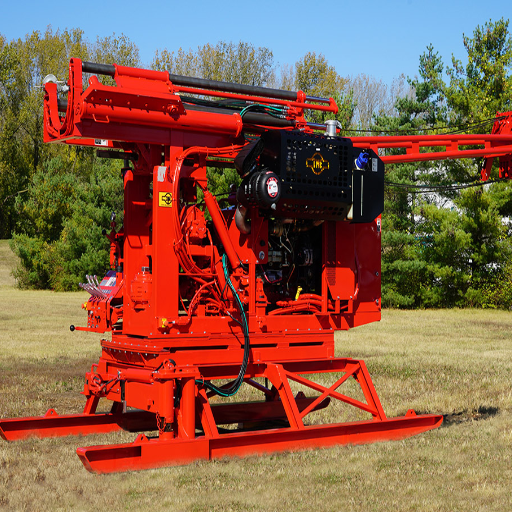
For example, the use of lightweight and mobile build-up becomes prevalent, especially with skid-mounted rigs. The main features of such devices include:
Drilling Mast
This is a strong and movable mast-like structure that can withstand the tension and motion during drilling.
Power System
It is generally made up of diesel engines or electric motors, which help to provide the power required for drilling and other operations.
Mud Circulation System
It is comprised of mud pumps, tanks, and many pipelines that adequately circulate drilling muds to maintain well-bore integrity as well as prevent cuttings from interfering with each other.
Draw Works
This is one of the important hoisting systems whose main function is to handle the drill string and other equipment attached to it in a very methodical manner to avoid excessive runout.
Rotary Table or Top Drive
The traditional drill string rotates around the installed table, but top drives provide such a developed level of drilling as to eliminate it from the operation.
Pipe Rack and Handling System
Also includes a proper storage area as well as a method to move the drill pipes and casings.
Control Cabin
Allows the engineer to have a complete overview of the operation via advanced monitoring and control equipment of the entire drilling system from a single place.
All this equipment is housed within the platform, enabling the realization of reliable and flexible features of skid-mounted rigs in different situations and at different expenses.
Essential Technical Specifications
All the above-mentioned numbers in terms of specifications show the help that can be provided by a skid-mounted rig in almost each and every area, where drilling and its related problems occur.
Understanding the Rotary Drive System
Among the essential elements of a drilling rig, the rotary drive is most important since it helps in the rotation of the drill string and drill bit needed for perforating the subsurface layers. In this system, there is a rotary table or a top drive unit provided in the rig according to the design. A rotary table, which is archaic, serves to transmit power from the drilling rig to the drill string through a collapsible Kelly, which is a thick steel mass. More advanced top drive systems eliminate the issues posed by Kelly and can instead rotate the drill string directly. This is a convenience during directional drilling because the skid-mounted rigs are more robust and efficient than the conventional rotary table systems.
The rotary drive system has also been integrated into the system to ensure wellbore stability. Rotation is controlled, and the cutting problem is minimized further through effective use of the circulation of the drilling mud. Furthermore, rotary drives of this era are optimized for greater lengths and even drilling in a horizontal plane. This is evidence of the versatility of rotary drives in adverse drilling conditions. These systems are advanced with innovations such as automated feedback loops, and this increases the reliability of the drilling operations, which become more challenging as time goes on.
Applications of Skid-Mounted Rigs Across Industries
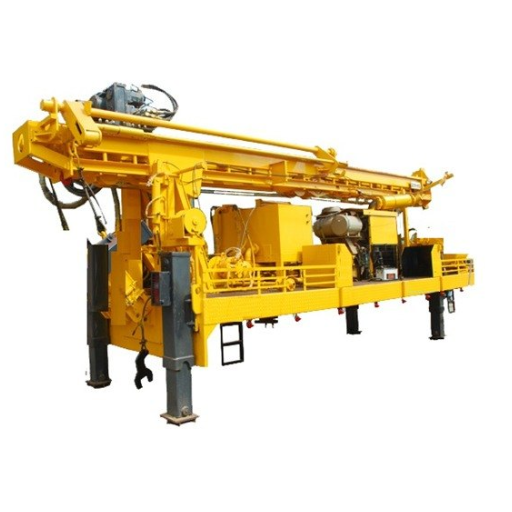
In numerous sectors, the deployment of skid-mounted rigs has become a popular choice owing to their minimalistic architecture, ease of mobility, and performance efficiency. This equipment is largely used for exploration and drenching in hard-to-access areas such as remote places in the petroleum industry, thus allowing the operator the convenience of quick mobilization with minimal installation time. These rigs have been used in geothermal projects to extract energy from beneath the surface by way of drilling wells into the ground that are capable of supporting high temperatures. Apart from these, such equipment is also commonly used in water well and mining exploration, and also for environmental studies, where it needs to be deployed in various geological conditions. In terms of size and ease of relocation, these rigs have a great appeal in adverse or congested conditions where traditional rigs are constrained due to transportation challenges.
Oil and Gas Industry Applications
Drilling rigs have turned out to be quite useful in the oil and gas field in both discovery and exploitation activities. The most important use of these rigs is drilling for exploratory wells, which is mainly done for locating and assessing hydrocarbon resources. In this capacity, rigs are further enhanced with technologies such as directional drilling, horizontal drilling, and hydraulic fracturing that allow oil companies to have optimal reservoir access and efficient extraction services. Furthermore, production wells, which are necessary for the continued extraction of oil and gas over an extensive period, also make use of such rigs. Core technologies like the introduction of offshore and semi-submersible rigs have allowed the exploration of deep water and ultra-deep water reserves that are being intensely sought after to meet the energy needs. Moreover, conditions that require either the fixing of the specific type of skid-mounted rigs or automated rigs necessitate efficiency in practice, safety improvements, and minimal intervals of time being wasted.
Applications in Mining and Exploration
The use of modern technologies in the mining and exploration industries has changed the resource extraction methods and site assessments. For instance, new ways like 3D modeling of geological structures and remote sensing allow exploration teams to solve complex problems such as the accurate mapping of subsurface architecture, which improves the localization of faults and ore bodies and drastically minimizes the effect on the environment. Effectively using automatic drilling and other robotic devices in places that are hard to reach, like underground or in poorly equipped areas, is also possible. In addition, the use of big data platforms allows operators to track the current state of operations and thus maximize utilization of resources without breaking any regulations. Such changes in technology improve mining and exploration processes for better accuracy, increased security, and environmental friendliness.
Other Industrial Uses for Skid-Mounted Rigs
The mobile drill units have been used for many industries apart from drilling and mining, because of their flexibility and modular attributes. For instance, compact acoustic ratings are used in several onshore and offshore drillings for the oil and gas industries and environmental feelers in operations in areas that are hard to reach by road. Simple and diamond-pointed boring can also be useful when applying geothermal energy, where the mission is to drill holes and extract ‘renewable heat’ from the crust. This also applies to the drilling of water wells in agriculture, municipal, and industrial water services. For such industrial uses, these rigs are quite convenient due to the fact that they can be easily assembled or disassembled for transport.
Skid-Mounted Systems vs. Traditional Installations
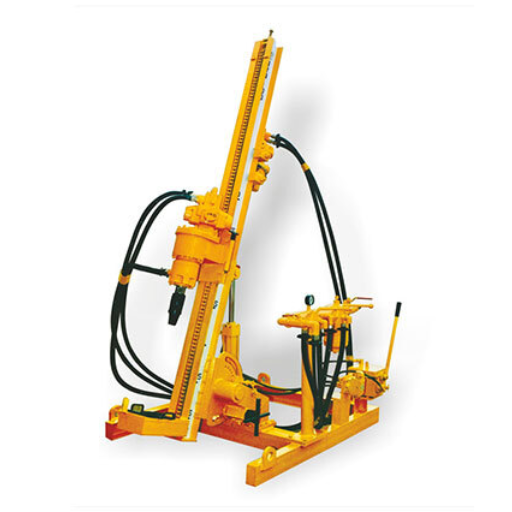
✓ Benefits of Portable, Skid-Mounted Equipment
There are manifold reasons for the popularity of skid-mounted equipment vis-à-vis conventional installations. These units are fabricated in a custom fit, reducing shipment issues, thereby compressing both time and costs involved during installation of the plant at the site. Being very mobile in design is advantageous due to their small size and ease of modification, especially in unusual and complex terrains. Also, where such systems need to be operated before being commissioned, skid-mounted systems allow such testing to be carried out beforehand, avoiding unnecessary delays during commissioning at the site. Integrated pieces of equipment allow easy and fast repair, as dismantling of the entire system is not required with such configurations.
✗ Disadvantages of Conventional Installations
Traditional construction installations, however customizable they can be, need a lot of incorporation and construction work on site, which leads to higher costs for workers and takes more time to install the system from scratch. They are also less portable, making it difficult to quickly pack up and move them around as needed when the project changes. They are also constrained by the environment and logistics, which work against the efficiency of traditional systems and increase risk, even in hiatus in many projects.
Cost-Effectiveness Analysis
In the principle of economic analysis, modular installations are far better than conventional systems. Modular systems are cheaper in terms of labor since they rid the contractors of on-site construction, because the major parts are already prefabricated. They also cost less in terms of transport and maintenance since they are designed to be moved around. A lot of these costs involve prolonged occupation, fabrication, retrofitting to accommodate new requirements, and other adjustment processes of traditional installations tend to cost rather more for a given duration of activity. In contrast, modular systems are structured in such a way that they can easily be expanded or relocated to enable new structures where no new investment will be required for the same structure. Considering time in operation and financial constraints, as well as modular construction, enhances efficiency by providing solutions that can enhance fluidity and functionality of operations without the need to stand down activity or alter the facility. There has been development of technologies and techniques, even plants that can be re-arranged or reattached almost without time loss; similarly, re-erection is possible with skid-mounted rigs that do not need to be bolted or welded to a platform.
Mobility and Flexibility Advantages
Skid-mounted rigs are simple enough and portable; they can effortlessly adapt to a considerable caliber of operation and structural change, including processes such as the erection, movement, and dismantling of the work skids. These are manufactured off-site in pieces easily locked together, and also bulky parts are for simple rigging. It can be parceled straightforwardly to the field, assembled, disassembled, and moved around as the project demands. Something impossible with the traditional building methods, which are more stable, compared to modifying additional structures in the case of modular systems. The approach attention reflects the simplicity of operation and cost of labour in the projects and their cold environments, which easily accommodate many of the industries, from the health care to education and infrastructure sectors. As a matter of fact, the way they are built also helps to optimize execution in case of transport to several destinations.
Installation and Maintenance Considerations
There is precision needed in the installation of modular units that includes suitable preparation of the surfaces, groundwork, and transport and erection access. This is important for the safety and compliance with relevant building codes. The construction of such a building type does not involve much time in the erection process because the modular panels are transported ready-made. Besides, it drastically improves the limits by removing concerns such as the accessibility of the crane or connection of utilities.
Modular systems are generally simple to maintain because of their standard geometry. Structure performance can be maintained over time by regularly checking connection joints, insulation, and load-bearing points. Most modular systems rely on sturdy and strong materials to last longer, assuring reduced intervals between surface rehabilitation activities. Nonetheless, whenever maintenance becomes necessary, such structures render easy component replacement or modification, minimizing breakdowns and interruptions of functions.
Choosing the Right Skid-Mounted Rig
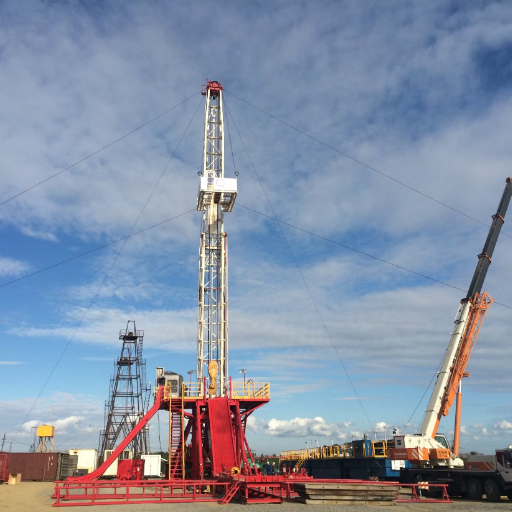
For choosing the right skid-mounted rigs for a project, it is important to carefully evaluate the site where the operation is to be carried out and the requirements of the particular project. Special attention is to be given to the load-bearing capacity of the rig, its adaptability to other available systems, and the properties of the materials this equipment is to be used for. Considerations should also be given to the overall dimensions and configuration of the rig and check if it will fit into the given space, and how easily it can be moved from one place to another. Most importantly, you need to ensure that the ease of use and cleaning of the equipment is optimized while remembering that there are certain measures to be taken in order to improve this as well.
Key Factors When Selecting a Manufacturer
While choosing the manufacturer, focus on the one that can be trusted to provide good quality, standardized products. You may wish to look for standards such as ISO 9001 to step up the maturity level of your quality management system. Look at market interpretations on the capacity and capabilities of the manufacturer, taking each of them into consideration in terms of whether they will be able to supply the current demand and also the future demand. In addition, remember to evaluate this factor in consideration of the distance so that you do not incur unnecessary freight costs or meet any delays since the product is available during most of the year, and consider offering extended warranties and after-sales support as well. In that case, don’t forget to seek client reference, examples, and third-party performance evaluation and review reliability before finalizing the deal.
Evaluating Different Rig Models
When encountering new rig models, what are the most important things to consider? In my case, I look at aspects like how easy it is to use, any safety considerations in place, and whether it suits my purposes or not. The rigs’ performance is quite dependent on a few parameters, which must be available in the specifications, such as capacity, mobility, and installation services, so it won’t be a case of defective equipment. Also, I take into account the reputation of the hard equipment maker. How good the product or the system is, and how reliable it is. It does not mean I can go in and pull out any of the skid-mounted rigs. I tend to choose models that not only address my current concerns but also have the capacity to fit in with soon-to-come advancements properly.
Importance of Technical Support and Service
It is very important to be able to provide technical support and services in order for the equipment to function correctly and for a long time. The efficient support helps the system to always be running and prevents stopping the operations in cases where each minute counts – for example, in high-intensity construction, manufacturing, or even IT. More so, a good technical support service makes it easy to mitigate issues that may arise quickly without having to incur the huge costs of repairing or replacing any existing components.
Providing support solutions is assessed by analyzing different dimensions. It requires taking into account the required response rate, the existence of consumables or replacement parts, and the competence of the support personnel. A competent local support is also expected to offer round-the-clock customer care, well-designed user manuals, enough to solve complex problems, and organized preventive measures. The makers and service providers who infuse into their people a robust training culture are those who are able to delight their customers the most.
Ultimately, sound customer care and technical support are not just optional bonuses but rather significant factors that determine operational effectiveness and total ownership cost of a given piece of equipment over its active lifespan.
Conclusion
Skid-mounted drill rigs represent the future of efficient, adaptable, and cost-effective drilling solutions across multiple industries. Their portability, durability, and versatility make them indispensable tools for modern drilling operations in even the most challenging environments.
Reference Sources
On-The-Fly Mixing Skid Mounted Technology
Published on OnePetro, this paper discusses the application of skid-mounted technology for cost-effective stimulation jobs on rigs with limited deck space.
Exploration on Pressure Increase Water Flooding Test with Skid-Mounted Pump
Available on Google Books, this source explores the use of skid-mounted pumps in water flooding tests and their operational benefits.
Rapid Rig Design – A Cost-Effective Innovative Design for Field Development
This paper, also from OnePetro, highlights the cost savings and efficiency of mobile skid-mounted rigs in field development.
Frequently Asked Questions (FAQs)
How does a drill mounted on skids work, compared to a truck-mounted structure?
If a truck exclusion zone is used for transporting the drill rig, it must not be under a permanent truck raider effect; however, it can be of use without the requirement of repair of the highway because of the steel frame, the so-called skid, onto which it is constructed. A structure built on a vehicle and trailer is not needed for a rig installation because there are no fences or any type of walls or roof on a drilling rig; therefore, the rig is taken on a crane, low loader, or forklift.
Which features are indispensable for any rig of the type skid-mounted?
A typical saddle frame includes a drilling mast, engine (diesel or electric), feeding mechanisms, rotation systems, winches, a control panel, and a mounting skid to ensconce all these apparatus. Many configurations are portable, hence they have an IP54 enclosure. Hence, the infovoltaics are installed within the structure of an enclosed cabin so that all the inner elements come enclosed and with the main as well as hydraulic pumps, RC heads, mud pumps, and storage for tools to make it essentially a drilling rig that is mounted on any surface with compactness.
What are the typical uses for mounted drilling rigs?
Mounted drilling rigs share a wide variety of applications such as geotechnical investigations, ecology and environmental control studies, prospecting and exploration of mineral and water resources, and foundation works constructions. Skid-mounted varieties and modi are highly suitable when quick installation, transportation between sites, or low ground and site preparation wherewithal is available, while truck-mounted types are used when one project requires going further than another one.
How can I determine the best candidate for skid mount models for my project?
Correct specification of the most suitable ridge is based on the depthoffunction hole diameter, formation circumstances, and power requirements. Cover also the height of the heelcomb and tone chart, and backward pull, current, and whether it will use Envy Popper or any of the coring equipment. Check transport, set up time, and manufacturer provisions for spares and service provision in the table below.
What kind of maintenance should be done to skid-mounted rigs if they are not in use?
To keep the skid-mounted drill fully functional, regular checks on different aspects such as engine and hydraulic system, lubrication of moving parts, types, and checking the mast and feed mechanisms will help. Using a drill for a long time will also call for the replacement of certain components, such as wear and tear items, like drill bits and hammer parts. A preventive maintenance schedule, together with genuine parts, will serve to prolong the life of any drilling rig product as well as keep production downtime minimal.
Are skid-mounted drills and DTH hammers suitable for rock drilling?
Certainly, quite a several skid-mounted drills are arranged in ways that make utilization of down-the-hole (DTH) full hammer systems, as well as other percussion tools, possible when it comes to rock drilling. To make sure that core samples will be retrievable, the rig should be able to sustain the air compressor demands occasioned by the weather and depth of the borehole. Furthermore, consideration should be given to the suitability of the hammer mounting, as with a powered rig fitted in a truck, where air is not a problem for use in hard-rock conditions. All rights reserved.
How is operational safety enhanced in a skid mounted Rig?
One of the fundamental safety measures is to conduct a hazard assessment of the site, secure the skids so that they do not move, ground the electrical system properly, perform lockout/tagout during maintenance, and instruct operators on proper operation of the line, winches, and hammers, if any. Proper personal protective equipment must be worn, and the manufacturer’s instructions for the lifting and transportation of the mounted rig must be observed.
What are the differences in transport and logistics for the skid and truck-mounted rigs?
In order to transport a skid-mounted rig, one usually needs trailers or trucks to load the product onto, followed by cranes or forklifts to place the product, thus accommodating both oversize and module-type loading. However, truck-mounted rigs can travel on their own, limiting the loading time but requiring a suitable sound road or highway and a licensed driver/operator. This shall be determined by issues such as accessibility, mobility uptake, and the cost of the logistic mobilization.
Related Posts
Loyal is a professional drilling equipment manufacturer specializing in oil rigs,
mud pumps, and solid control systems for global drilling operations.
mud pumps, and solid control systems for global drilling operations.
-
Phone: +86-531-55583139
-
Whatsapp/Wechat/Mobile: Ashley: +86 13256674591
Cindy: +86 13176674591
Products
Quick Links