
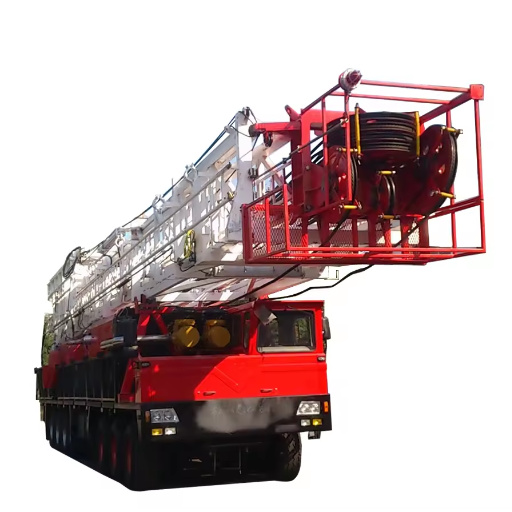
Mobile drilling and workover equipment: Drilling rig technology
The advent of mobile drilling & workover rigs in the oil & gas sector has transformed the way companies conduct operations in the field in terms of great levels of efficiency, flexibility, and adaptability. All these are due to technological advancements in modern drilling rigs that have made it possible for operators to drill in high-elevation locations, even in remote areas, without raising more safety concerns. The present article discusses the current developments in the area of available mobile drilling and workover machinery and covers the peculiarities of its contribution to operation management, enhancing efficiency and minimising idling of machines. This complete guide will be useful to anyone seeking to know the modern drilling systems, especially to industry stakeholders regarding the advancement of energy exploration technology.
Introduction to Mobile Drilling and Workover Rigs
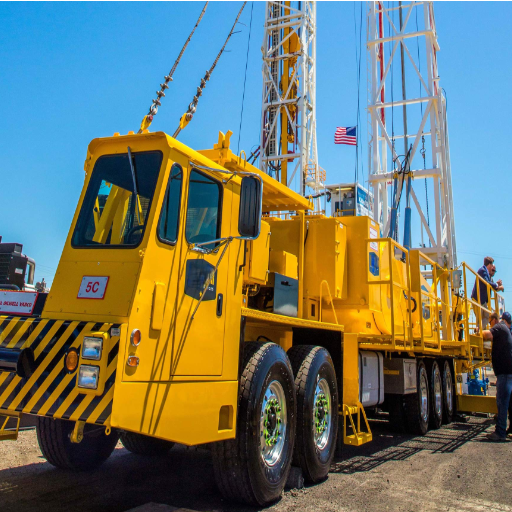
The use of mobile drilling & workover rigs is a widespread practice across the oil and gas industry, where drilling new wells and augmenting the productivity of existing ones, including those already abandoned, is required. These machines are constructed to grow wheels, to maximize ease of transportation to distant or difficult sites, and hence minimize as much as possible the contact time of installation compared to their counterpart fixed-type setups. Among the major equipment involved are masts or derricks, hoisting systems, and ingenerated power modules, all providing effective and safe operation. Finally, the design of mobile rigs is such that they can cover a wide range of operations; this ability puts them in all the spheres of exploration and production activity as the key components of any process aimed at productivity enhancement with the least possible delay.
Current Market Landscape
Steady growth characterizes the global market for mobile drills and workover units, thanks to, among other factors, the growing oil and gas exploration needs as well as the development of drilling equipment. The company is also geared towards designing portable drillers which, in addition to being more compact, are capable of performing greatly in drilling and offer better remote and monitoring features while maintaining very high environmental standards and dispersed regulatory conditions. The dynamics, however, vary with regions, where North America takes the lead due to its gas productivity, while the Middle East has always been a steady producer of mega production plants. Lastly, the Renewable energy movement in this regard is causing this crisis, effectively resizing the business of mobile drilling & workover rigs, but not altering the significance of the drilling element in the operation. The industry warp is first and foremost centered on achieving operational excellence, reducing costs, including. technological development that has and will continue to influence the market.z
Core Challenges in Rig Operations
Ensuring operational efficiency in rig operations proves to be a challenge given the extreme environmental conditions. Offshore operations particularly face harsh weather and corrosive marine environments, special equipment that needs a rigorous maintenance plan, and advanced materials for continued functioning.
Further issues arise from cost control concerns. The need for mobile drilling & workover rigs, with rich capital and operating costs, amongst others, requires thoughtful allocation of resources since the fluctuations in the market conditions and energy costs affect the returns on investments. Companies have to spend on technological improvements in infrastructure and equipment frequently, while also controlling costs in order to remain in business.
At last, advanced technologies bring about the need for further exploration for their management and moderation. Automation, data analytics, and real-time monitoring systems help in performance optimization and reduction of downtime, but are characterized by high mobile drilling & workover rigs drivetrain equipment, trained personnel for operation, and strong cybersecurity user data loss measures, among others. These interactions have to be factored in, as they will be the determinant of whether the rig operations will be effective and self-sustaining or not.
Technical Specifications of Mobile Rigs
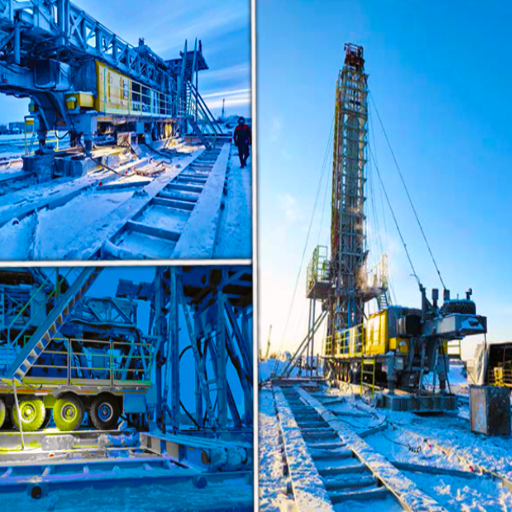
These versatile mobile drilling & workover rigs, modern drill units, can be designed around various operational requirements. Main options are the following:
Mobility: They are designed as mobile units that can be mounted on a truck, trailer, or skid-based units for easy transportation.
Power pack: Usually diesel or electric generators mounted on the workovers, for workovers and other mobile units that are used outside.
Depth of Drilling: Commonly, mobile units can drill in the induced range of 1000-10000 ft, while some may exceed or be lesser.
Height of the Mast: Typically, the common practice accommodates the rig in piped type, and is ordinarily performed within the 30-120 ft.
Blowout Preventers (BOP): BOPs are fixed in place to stop any unwanted flow of well contents during drilling.
Louvers: Mobile rigs are provided with powerful mud systems for recirculation services as well as in-hole control and wall support of the borehole.
Such characteristics ensure that mobile drilling & workover rigs are suitable for many purposes, economical, and fully functional in many different settings and applications.
Key Components of Mobile Drilling Rigs
Mast and Derrick
They are basic structural components that are designed to accommodate the drill string at certain heights, and the drill pipe lengths vary from 30ft to 120ft. In drilling operations, there is an erect mast that accompanies this process and is collapsible for easy transportation.
Drilling Assembly and Rotating Table
This is an assembly of drill pipe and drill bit known as a drill string, where drilling is accomplished with the turning of the rotary table or a top drive. This piece of equipment is effectively put to use when there is a need for drilling into different layers of the earth.
Circulating System (mud pump)
The entire system includes mud pumps that have the capacity to force drilling fluids or mud down the well so as to help in the control, application, and cooling of the bit, as well as conveying the cuttings back to the surface. The inclusion of hydrostatic pressure enabled by drilling fluids ensures that the internal pressure is counteracted and the formation remains intact.
Blowout Prevention Device (BPD)
An essential piece of equipment, known as the BPD device, provides emergency response capacity with regard to unusual pressure conditions inside the borehole. If such a high-pressure condition takes place, the workers are able to intervene by closing the well or diverting the flow through alternative means, thanks to the device that executes such a function.
Power Supply
With mobile drilling and workover rigs, robust power will always be required, and this burden is usually carried by the generator engines, which are either diesel or electrical systems, without which all mechanical and hydraulic elements are useless, including the rotary, hoist system, and mud pumps, all included.
Lifting appliances
A hoisting system is a combination of a rope, work drum/ drawworks of an overhead crane, and a carriage/ blocks and tackles, which, with a wire rope, enables the raising and lowering of the heavy drill string, casing, and other tools at different levels of drilling operations.
Operator Station
In the operator’s cabin, it is also possible to install advanced control consoles to manage drilling parameters such as applied weight to the drill bits, turning torque, or fluid flow rate with precision.
All these components combine effortlessly to facilitate the movement, flexibility, and productivity of mobile rigs, which makes them an essential resource in the field of drilling and well completion in different environments.
Specifications of the Latest Workover Rigs
Contemporary workover units have the function of being mobile drilling & workover rigs as well as – what is more important – they can carry and successfully perform the tasks of wells’ service that are very challenging either in terms of the location or the conditions.
Comparing Truck-Mounted vs. Trailer-Mounted Drilling
Transferability and installation
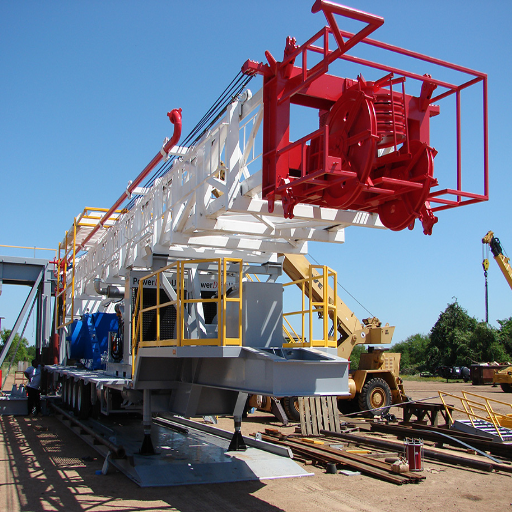
The main advantage is that mobile drilling & workover rigs are more mobile and faster to set up. Compared to the traditional methods, they are installed completely on the truck cab without any means of transporting additional parts of the rig. Hence, these rigs can easily be deployed at every site at relatively low cost, especially in what is more the case…. Such equipment is highly recommended for projects that almost entirely work in remote places or that create neutral running space. Most of the trailer-mounted rigs allow one to custom-design the site to take care of, as the rig is pulled by another trailer. This helps in the trailer assembly process that is carried out with ease since all the compartments are up to design, and it takes a few hours to deal with it; however, mobility is limited during transport.
Capacity and Load
This structure keeps the height of the vehicle low without dismounting the rig, making it one of the most efficient mobile drilling & workover rigs; however, Table 2 includes a comparison between these and rear-loaded systems that may be considered for use in countries where rear loading is permitted. Thus, if a crane has fewer “drops” between its point of origin and the location of discharge or unloading respective flexotainers but has a larger footprint compared to the number of ‘drops’, its capacity decreases proportionally. Truck-Mounted Rigs, on the other hand, result in ease of mobility but lack any significant load subsurface or otherwise because usually the chassis of AMD cannot take increased load.
Purchase and Operating Costs
Advantages of a single piece of equipment include savings in cost, as there is an avoidance of buying additional transport and drilling units. In addition, fewer parts require minor servicing, thus simplifying survives as prospective for longer operation. But one cannot rule out that the up-front cost retro truck rig is more expensive, but in using such a rig, one purchases ‘long-life and durability’. As opposed to changing the rigs, in the case of pump vehicles, such as the interchange of trailers and replaceable blocks of machines with spare parts mounted.
Terrain and Accessibility
To this end, truck-mounted rigs are more practical in rough terrains or in tight work areas as their reduced size and fully integrated structure are beneficial. Trailer-mounted rigs, on the other hand, being larger than truck-mounted rigs would normally, Thus also enable more unrestricted spaces without so much consideration of being positioned or entering work access areas that need careful planning.
There’s an array of designs available in each setup, and therefore, the consideration falls down to the particular drilling operation needs, including means of transport and storage, duration of the project, nature of the working environment, and even cost consideration.
Operational Advantages of Mobile Drilling Rigs
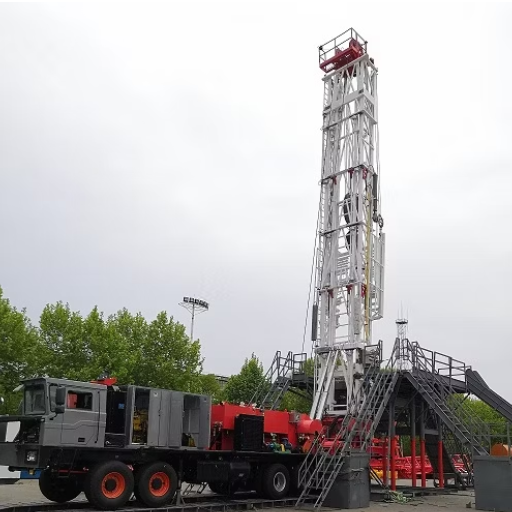
Mobile drilling rigs have come up with several operating advantages that make them very convenient for many operations. They are more preferable because they are easy to move from one site to another, and thus one enjoys reduced waiting times and increased productivity. The small size of some mobile drillers makes it possible to reach tight areas and far-off places wheretransportation thereof is a big issue. Moreover, these rigs take little time to prepare as compared with conventionally established permanent rigs, hence improving the speed of projects commenced by the equipment. Their ability maintains costs low when multi-purpose operations are to be performed over several industries. Such benefits of mobile drilling & workover rigs make them useful in operations wherein the objectives are both progressive andperiod sensitive.
Mobility and Setup Time Benefits
The advantages of the mobile drilling & workover rigs cannot be overemphasized; they are time-effective. They are built in such a way that they can be moved easily from one place to another, even if the region is very far and there are no roads. This ensures that operations start in places without sufficient infrastructure, thus increasing the area of operations and penetration. Moreover, quick installation also facilitates swift deployment, allowing operations to commence more easily and quickly. They are flexible enough to be used in both onshore and offshore capacities, making them very important for industries that require a lot of mobility while fast-tracking their operations.
Efficiency in Remote Locations: Desert and Offshore
Some drilling operations in remote locations, such as deserts, inshore, and offshore, may require the use of special tools and techniques. This will help to achieve cost-effectiveness and dependability. For deserts, the problems are largely caused by the risk of very high temperatures, low water availability, and weak ground surfaces. Geared up with heat-contrained systems and large water storage units, mobile drilling & workover rigs for harsh environmental conditions often exist. Additionally, there are also designs of cases where moving materials is easier on those types of roads.
Offshore drilling takes more preemptive preparation, mostly due to extreme weather and high pressure below the water surface barriers. New offshore rigs, e.g., drillships and semi-submersible rigs, are such that they maintain poise and accuracy during operation even in such rough conditions. In addition, operational interventions are still carried out remotely and less on-site as automation and monitoring intervention systems have been improved for efficient operations. Operations in deserts or offshore environments highly benefit from advancements in any type of machinery that make it more robust and flexible to work in extreme conditions without breaking down.
Cost-Effectiveness of Mobile Workover Solutions
One of the most effective methods of achieving this involves using mobile drilling & workover rigs whose size and sophistication enhance efficiency, flexibility, and cost-effectiveness in the oil and gas business. This, among others, is made possible by the reduction of downtime spent, especially due to fast deployment and less time spent in assembling and disassembling the equipment to be used. On the contrary, mobile units have some merits, including a limited workforce and logistical expectations, thus cutting down on the figures required to be spent on operating such units. It is also worth noting that this feature allows for enhanced accuracy, avoidance of unproductive periods, and better utilization of resources, even as the functionality of these units is designed to be supportive of such targeted work. More so, the application of new generation automation and remote self-control simply means increasing utilization while bringing down servicing costs and aging expenses. Therefore, it can be argued that mobile workover units find a central place both economically as well as operationally in the steps of developments, expected improvement of activities both ashore and at sea.
Current Trends in the Mobile Rig Industry
There has been a growing trend toward the mobile drilling & workover rigs that are sustainable, efficient, and digitally advanced. The recent trend establishes that there is an increase in the use of electric and hybrid powered rigs in order to curtail environmental damage and meet the I-LEVEL I.social awareness that is the stricter emissions laws. The use of automation and data analytics is also being implemented in order to improve the accuracy of operations, enhance efficiency, and reduce expenditure. Moreover, there is growing interest in modular rig designs as they are versatile and swift to install, which makes them viable in different operational settings. The introduction of the hitherto mentioned improvements is motivated by the industry’s need for low-cost, eco-friendly, and flexible technologies aimed at meeting the changes within the energy industry.
Recent Innovations and Technological Advances
The energy industry has undergone a number of technological changes that have sought to improve its efficiency and sustainability. One of the innovations is AI and particularly machine learning, which is used in real time for data analysis and even predictive maintenance. Such tools enhance operational efficiency by diagnosing faults that need to be rectified early enough in order to avoid unnecessary costs and maintenance. In electrical energy, advanced solar panels using perovskite materials and offshore wind turbines with larger eruptions are increasing energy production while curbing footprints. Another equally important factor is the ‘carbon capture, utilization and storage’ (CCUS) installed in novel technologies to curb greenhouse gases for several organizations, all of which are mindful of the environment and thus ensure the sustainability of the earth. The application of any of these would be a sign of strict adherence to economic and environmental principles that restrain the need for new developments.
Market Movements: Focus on API Standards and China
The influence of American Petroleum Institute (API) standards continues to redefine the global industry trends, more so within the oil and gas sectors, where there is a regular norm of standardization of processes and elements to ensure safety and quality. Standards by the API are now moving towards the same digital transformation, including new standards on automation, application of machine learning, and predictive maintenance in industries. This explains how there is a huge global pressure in synchronizing operational systems with new technological advancements for performance enhancement, as well as less application downtime.
Being a key venue of energy and industry, China strives to exert its power in the international market by increasing its imports and increasing its exports, which includes the application of the API standards. This effort mainly involves improvements in facilities at the national level to align with the required quality assurance frameworks or coming up with their own solutions. It also implies that China integrates sustainable development into both its internal and foreign policies since API compliant systems most of the time harp on how to address impacts from the environment. All of this production underscores the intersection of technical norms and the position of industries in different geopolitical scenarios to date engineering practices.
Best Practices for Implementing Mobile Rigs
Exact Site Adaptations
Before installing the Humber drilling huts, it is essential to assess the topography, the environment, and the access issues, considering the distance to determine if the site is appropriate for mobile rigs on a foundation.
Adhere to Health and Safety Compliance
It is imperative to comply with both national and international safety guidelines, which include proper rig anchorage, loads on harnesses, and operational procedures, in order to reduce operational hazards.
Enhancement of Transportation Processes
Structure the itineraries and ways of transportation in advance to make sure that the time for initialization is reduced and the system is deployed. Advanced transport tools can be utilized only when needed.
Scheduled Maintenance Regimes
Carry out routine checks on mobile rigs and conduct repairs when necessary to avoid mechanical breakdowns during operations and to fully operationalize the equipment cycle.
Training
In order to operate or work on mobile drilling & workover rigs, all such personnel need to be competent in the operation of the equipment, all safety aspects and procedures, as well as troubleshooting methods.
Choose Scalable Hardware For Your Project
Use mobile drilling & workover rigs that meet the precise project’s technical and work demands without constantly being in performance and safety confrontations.
These measures shall allow for enhanced performance, minimized water losses, and optimal utilization of modularized drilling rigs.
Selection Criteria for Drilling and Workover Rigs
One of the fundamental steps in the selection process for a given type of drilling and workover rig has many technical and practical factors that have an impact on such selection:
Bearing Capacity and Depth Constraints: Either the type of the rig or the capacity of the load should be able to support the expected level of load and depths of operation. Rigs built to support deeper wells or thick formations may require more pulling load as a hook and stronger spare part structures.
Transportability and Location of the Dex: It is necessary that the rig should be easily transportable and able to be relocated. These skids or modular rigs comparatively have better mobility and shorter erection time than the other two.
Energy and Lifting Means: The potential of the rig in terms of power, usually given in HP, is analyzed to check if it can perform certain loads that require hoisting tables attached to it. Check if the engine is economical and the draw-works are above project expectations, as well as the torque on the rotary table. Such general consideration is made as the horsepower decreases in the final stage.
Mobile drilling & workover rigs are among the most commonly used drilling rigs type around the world due to their strong effectiveness and operational flexibility, as well as economic factors.
Blowout Prevention and Safety Features: Make certain the rig has updated BOPs as well as equipment that is fully automated for the purpose of ensuring that there are no accidents during drilling or work over operation. This is a matter of safety, and it cannot be compromised in any way.
Automation and Control System: Manual input has quite often been done away with in the recent past due to the fact that most machinery being deployed on the modern rigs is automated. Additional upgrades will include rig types that incorporate efficient monitoring, data capture, and operation control systems to enhance delivery.
Environmental and Regulatory Compliance: Make sure that all emissions, noise, and waste management provisions are met by the mobile drilling & workover rigs. Regulations related to operational aspects, however, need to be complied with.
Cost Effectiveness: Evaluate the total cost of ownership (TCO), including the capital and operational costs, and the repair costs. In addition, modular upgrades may help minimize future costs.
Determining the most suitable equipment for a particular operation involves careful consideration of site-specific demands, technical criteria, and functional features in order to ensure top-notch functioning as well as adherence to set standards.
Operational Best Practices for Field Implementation
Working in the field and practicing operational best practices, I pay attention to the elements of efficiency and reliability, as well as safety. I strictly measure all activities to limit exposure as articulated in health and safety standards. Also, I put emphasis on easy teamwork and communication, fitting equipment maintenance, and the optimization of resources’ management to enhance the performance while minimizing mobile drilling & workover rigs operations, for instance, shutdown intervals.
Conclusion
Mobile drilling and workover rigs represent the cutting edge of efficiency, flexibility, and technological advancement in the oil and gas industry. As operations become increasingly complex and remote, these versatile systems continue to evolve, offering cost-effective solutions that balance operational excellence with environmental responsibility, ensuring their critical role in energy exploration for the future.
Reference Sources
Drillmec: A leading manufacturer of mobile drilling rigs, providing detailed information on their products and applications. Visit Drillmec
MDPI – Journal of Marine Science and Engineering (JMSE): A special issue discussing mobile offshore drilling units, including academic insights. Visit JMSE
ResearchGate: A platform hosting academic papers, including research on mobile drilling rigs for deep seabed exploration. Visit ResearchGate
Frequently Asked Questions (FAQs)
In what ways can mobile drilling & workover rigs be used for repairs and replacements in the oil and gas industry?
Structural designs of mobile drilling & workover rigs improve how well services are conducted both during basic operational tempo and (The minerals here are primarily crude oil and natural gas but can include other minerals such as geothermal energy, sands and gravel, and so on) and thus make wireline operations, repair of tool joints, blow-out preventers, and replacements of elevator and t-bar, and other deepwell workover easier. When fully erected, these rigs are prepared for fast turnaround, transportable, and capable of running to land rig sites prepared for work at water depths, geothermal, and oilfield mechanical drilling, respectively, enhancing the availability and affordability of quick interventions for contractors.
What are the must-have items in the mobile truck and trailer drilling mounting units?
1. The key components of a truck-mounted drilling or trailer-mounted drilling unit comprise a mast or tower, hoisting assembly, power system (common for equipment like Allison and CAT), mud pump, rotating table or a top drive, tong when necessary, and housing for tool operation. There is the self-propelled casing and trailers with cabins that range from simple trucks to complex mobile powered units with fitted, usually Allison’s transmission to enable the clients to insert the unit in their field of operation, these latter being more suited for protected areas because they may be abused during distribution.
Is a powertrain of 1000 hp applicable to enhance mobile drilling rigs’ capabilities?
It is possible to equip mobile drilling and workover rigs with a powertrain that has Hp more than a thousand horsepower in order to gain additional torque in demanding deep workover rigs or geothermal drilling. Higher power packages offer better mud pump performance, top drive torque, along with lifting capacity; thus, providing greater capability for rod transfers, heavy tong, and problematic oil or well drilling operations.
What kind of mounts and chassis variations can a self-propelled body and a hook transom, including the XJ750 type, have?
Crash-tested structures for each body and trailers for bodies on wheels, such as the XJ750 includes all the truck-type chassis where the mount system is in-built to enable heavy lifting of loads that are higher than just personal transport trailer chassis. They incorporate appropriate fitted supports so as to enable provisions for power plants alongside units such as CAT engines and Allison transmissions or even extreme terrain chassis for oil fields that are further. The XJ750 is a representation of a certain class of load-bearing capacity, especially where those particular tasks involve mounting workover or well service equipment.
Inhold name three reasons why mobile drilling and workover operations would be preferred?
Why mobile drilling & workover rigs are commonly preferred is that they shorten the mobilization period thereby the overall downtimes after completion of the well can be minimized; operating and maintaining costs are way cheaper than those of the normal stationary stations and offer a wide range of services such as drilling and work over of a well as well as intervention services for recompletion of a well. The value of mobile rigs is felt when the well has multiple perforations to be treated, a number of land rig fabrics already on the field, or there are urgent requirements to service a particular well.
Is there any transmission or powertrain arrangement that is as good as an Allison, or better, such as Cat, for the trailer drilling unit?
Yes. Most of the drilling units mounted on a trailer have such types of transmission and powertrain configuration, like Allison for normal driving and Cat for guaranteed power. This allows for easy positioning of the unit and provides enough hydraulic and electrical forces for top drives, mud systems, and drilling equipment in general, hence boosting the oil drilling and well servicing activities.
What are the responsibilities of work over rigs with reference to rod transfer and fingerboard usage in a rotary and on preventive maintenance of an oil well?
While the rod transfer and the fingerboard are both essential components in a drilling rig, the functions of the two parts are different, as they are designed to perform different tasks. This operation can be done via equipping the well service rigs with interventions wrenched slips, drilling catheads, and handling tools to facilitate the various operations such as jointing and pruning of pipes, working slotted liners in oil field wells, safeguarding the oil and gas wells, all through out operating truck- or trailer- mounted work- over services while at the same time ensuring quickness and safety.
Related Posts
Loyal is a professional drilling equipment manufacturer specializing in oil rigs,
mud pumps, and solid control systems for global drilling operations.
mud pumps, and solid control systems for global drilling operations.
-
Phone: +86-531-55583139
-
Whatsapp/Wechat/Mobile: Ashley: +86 13256674591
Cindy: +86 13176674591
Products
Quick Links